Is a Power Plate the same thing as a vibration plate?
It is one kind of vibration plate, from the company that made the category famous in gyms. People say "power plate" the way they say "Jacuzzi", which is why the two terms get mixed up in search. The machines you see for $150 to $400 online are vibration plates too, but most of them work differently.
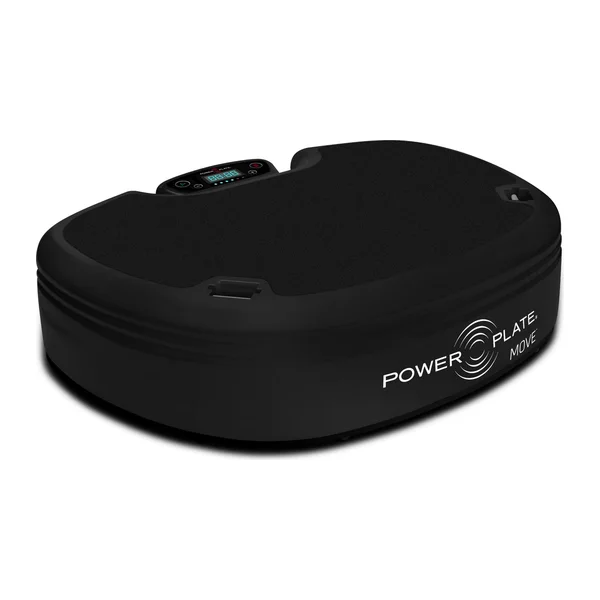
A typical home plate oscillates: the deck tilts like a seesaw at 4 to 15 Hz. A Power Plate vibrates in three directions at once, quickly and by a small distance. The company calls this PrecisionWave and describes it as harmonic, tri-planar vibration. The Power Plate MOVE runs at 30 to 40 Hz; the Personal Power Plate at a fixed 35 Hz. If the two families are new to you, start with oscillating vs linear plates.

What do you get for the money?
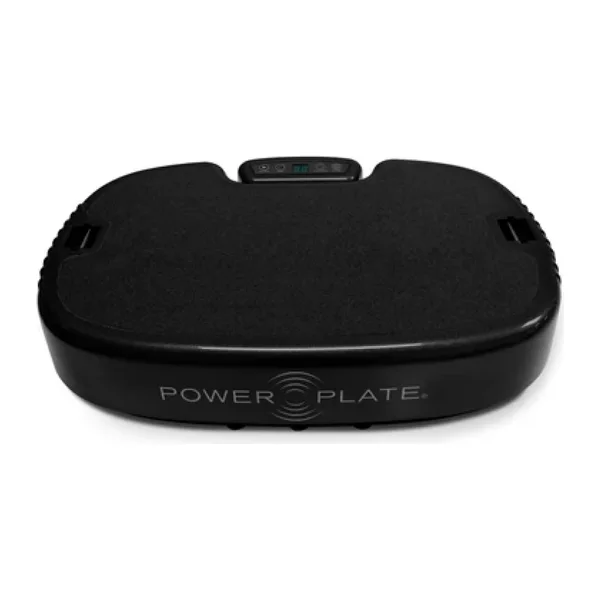
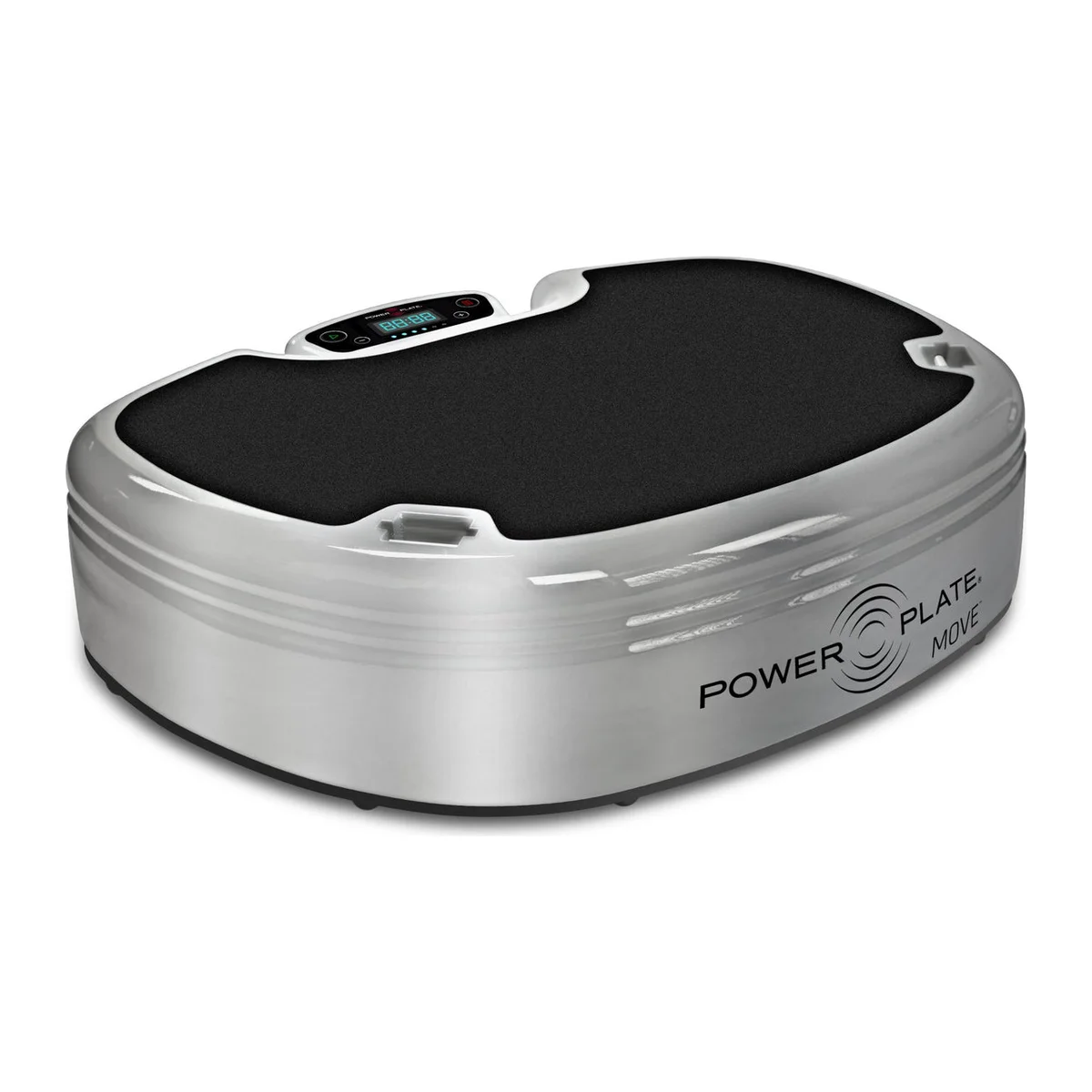
Start with what is on the page. The MOVE has a 30 by 24 inch deck, the largest in our comparison, and weighs 85 lb. That mass is part of the point: a heavy machine stays planted under a lunge. It has six levels (three frequencies, two amplitudes), a remote, strap set and a rubber mat, and a timer with 30 and 60 second presets that counts up to 9 minutes. Power Plate covers the hardware for 3 years, the electronics and labor for 1.
The Personal is the entry ticket: a 27.5 by 18.7 inch deck, 40.4 lb, one frequency, two amplitudes, a 264 lb limit and a 1-year warranty across the board. Both ship free and both are sold as HSA/FSA eligible on Power Plate's store. What you are paying for, beyond the parts, is a specific motion and a name that trainers and physical therapists already know.
What don't you get?
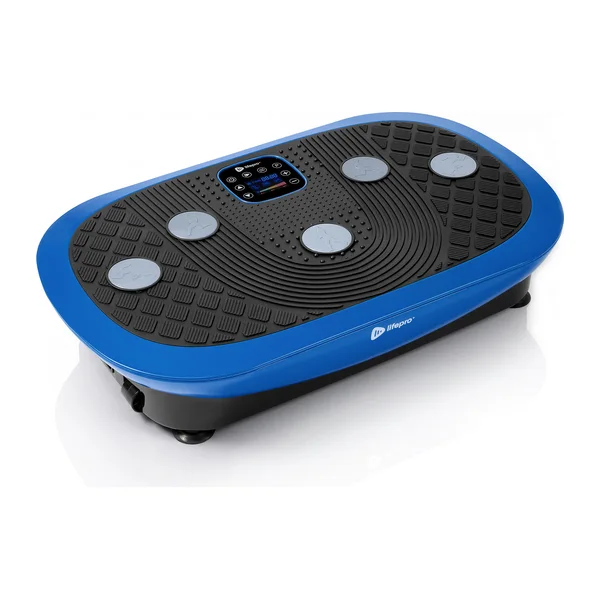
Range, first. The MOVE starts at 30 Hz; there is no slow setting for an easy day. A LifePro Rumblex Plus 4D goes from 4 to 40 Hz for $399.99, with a different kind of movement. Second, numbers: Power Plate gives its amplitude as Low or High, with no millimeter figure and no G-force on the product pages we read. Vibration Therapeutic publishes both, on a plate that costs a fraction of the price.
Third, capacity and cover. The MOVE is rated for 300 lb and the Personal for 264 lb, less than most $200 plates (330 lb) and far less than the Rumblex Plus (500 lb). And the warranty is shorter than LifePro's lifetime cover or VT's 10 years. In our formula, which weighs price, capacity, range, warranty, published specs, returns and kit, that is why the MOVE lands at 7.9/10 and the Personal at 7.5/10: good machines, scored hard on value.
Video: "Power Plate | Overview & Demonstration with Dr. Perry Cammisa", Power Plate on YouTube. Not made by us; chosen because it shows the plate or the topic clearly.
How much does a Power Plate cost in 2026?
On November 12, 2026, on powerplate.com: $1,721.25 for the Personal Power Plate and $2,790 for the MOVE, both under a "Black Friday 25% OFF" banner (regular prices shown: $2,295 and $3,720). The Wood finish of the MOVE was $3,093.75. Above that, the my5 is a column machine at $6,495; we left it out of the comparison because it is another class of product.
Read the return terms before you order at these prices. Power Plate's refund policy gives you 30 days from delivery, you pay the return shipping, and there is a 15% restocking fee on opened products (5% if unopened). On a MOVE at the price we saw, 15% is about $418. So try one in a gym first if you can; many have them.
What is the best Power Plate alternative?
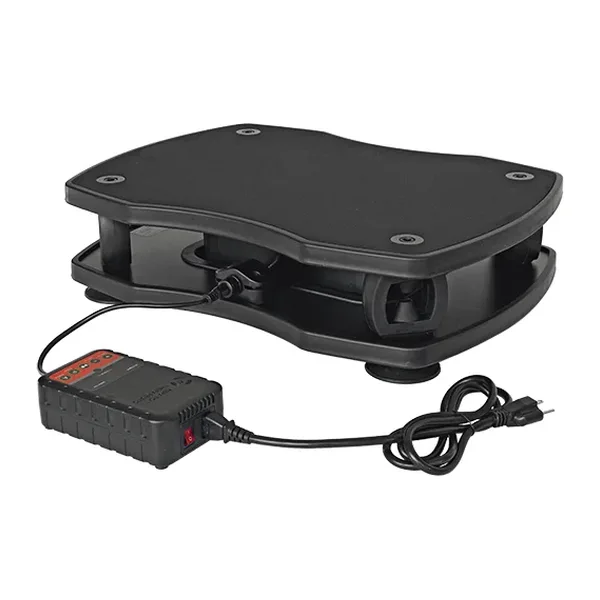
It depends which part of the Power Plate you want. For the fast, small vibration: the VT007. It is linear (straight up and down, not tri-planar), runs from 10 to 40 Hz in 1 Hz steps, and comes with a 90-day free return and a 10-year warranty for $479.99. Its limits are a small 22 by 16.5 inch deck and a 250 lb maximum.
For a premium machine with coaching: the Hypervibe G10 Mini, pivotal, 5 to 25 Hz, with an app of 40 programs, at $1,439.20 plus $75 shipping. The duel Hypervibe G10 Mini vs Personal Power Plate sets the two side by side. For range and capacity on a budget: the Rumblex Plus 4D. And if "alternative" just means "something that vibrates for less", any plate in our under-$150 ranking will do the gentle daily job.
Are the health claims any different?
No. A higher price does not buy stronger evidence. Power Plate's own pages carry the standard notice that its products are not intended to diagnose, treat or prevent any disease. The Mayo Clinic's summary applies to the whole category: some research shows whole-body vibration may help improve muscle strength, and may help with weight loss when you also cut calories, and thorough research is lacking.
It also says vibration can be harmful in some situations, and to check with your doctor before using it, especially if you are pregnant or have any health problems. That holds for a $120 plate and for a $2,790 one. If you are buying for a medical reason, the conversation with your doctor matters more than the logo on the deck. Our guide do vibration plates work? goes through the claims one at a time.
Who should buy a Power Plate anyway?
Three kinds of buyer. You already train on one at your gym or with a therapist, you like it, and you want the same machine at home: then nothing else will feel the same, and the MOVE is the home model to get. You want a plate as a piece of furniture that stays out, takes lunges and push-ups without moving, and lasts: 85 lb of machine and a 30 by 24 inch deck do that. Or you have an HSA/FSA budget to use and the price is not the question.
Everyone else is better served lower down. For most homes, our overall No. 1 costs $399.99 and scores 9.6/10; the full list is in the ranking of all fifteen plates, and Rumblex Plus 4D vs Power Plate MOVE shows the trade line by line.
What should you ask before you pay?
Four questions, for Power Plate or any dealer. Is the price I see the sale price or the regular one, and when does the offer end? (We saw 25% off on November 12; banners change.) What exactly does the restocking fee apply to if I open the box and change my mind? Who pays to ship an 85 lb machine back? And for the warranty: what counts as hardware, what counts as electronics, and is in-home labor included after the first year?
Then ask yourself one: will I use a machine that only does fast vibration? If you are not sure, a cheaper plate with a wide range is the safer first purchase, and a Power Plate can come later.
The plates in this guide, side by side
4 plates in this table: scroll sideways to see them all
| Plate | ||||
|---|---|---|---|---|
| Vibration type | Tri-planar | Tri-planar | Linear (vertical) | 4D (3 motors) |
| Frequency | 30–40 Hz | 35 Hz (fixed) | 10–40 Hz | 4–40 Hz |
| Amplitude | Low / High | Low / High | Up to 2.6 mm | 0–12 mm |
| Max user weight | 300 lb | 264 lb | 250 lb | 500 lb |
| Platform | 30 × 24 in | 27.5 × 18.7 in | 22 × 16.5 in | 29.4 × 17.7 in |
| Motor | Not stated | 185 W | 80 W | 640 W (3 motors) |
| Warranty | 3-year | 1-year | 10-year | Lifetime |
| Returns | 30 days, fees apply | 30 days, fees apply | 90 days | 30 days, unopened only |
| Where to buy | Check price at Power Plate | Check price at Power Plate | Check price at VT | Check price at LifePro |
✓ marks the best figure of the row. Prices checked November 12, 2026 on each brand's own US store.
This guide helps you buy; it isn't medical advice. Whole-body vibration can be harmful in some situations: check with your doctor before using a plate, especially if you are pregnant or have any health problems.